Can Stress or Anxiety Make Tinnitus More Noticeable?
For many people, tinnitus does not stay at the same level all the time. Some days the ringing, buzzing, or humming barely registers in the background. Other days it suddenly feels impossible to ignore. One of the most common patterns people notice is that tinnitus becomes louder or more intrusive during periods of stress, anxiety, poor sleep, or emotional exhaustion.\
A 2023 review published in Frontiers in Aging Neuroscience found that psychological stress appears closely linked to both the development and worsening of tinnitus symptoms. Another 2025 meta-analysis examining tinnitus and mental health also identified significant associations between tinnitus, anxiety, stress, depression, and insomnia.
That does not necessarily mean stress directly causes tinnitus in every case. However, stress and anxiety can absolutely affect how noticeable, intrusive, and emotionally draining tinnitus feels.
Why Tinnitus Often Feels Worse During Stress
Tinnitus is not simply an ear problem. It also involves the way the brain processes sound and attention.
When stress levels rise, the brain becomes more alert and reactive. This heightened state makes it harder to filter out background sensations that would normally fade into the subconscious. As a result, tinnitus can suddenly move into the foreground of attention and feel much louder than usual.
Stress also affects the nervous system in several other ways:
- Increased muscle tension around the neck and jaw
- Poor sleep quality
- Heightened awareness of internal sensations
- Increased fatigue and irritability
- Difficulty concentrating
All of these can make tinnitus more difficult to ignore. Some studies have even suggested that chronic stress may influence the body’s hormonal and neurological stress-response systems in people with persistent tinnitus.
Anxiety Can Create a Cycle That Reinforces Tinnitus
One reason tinnitus becomes emotionally exhausting is that anxiety and tinnitus often feed into each other.
A person notices ringing in their ears and becomes worried about it. That worry increases stress and hyper-awareness, which then makes the tinnitus seem even more noticeable. The louder or more intrusive it feels, the more anxious the person becomes.
Over time, this creates a cycle where the brain starts treating the tinnitus sound as something important or threatening instead of something neutral.
This is one reason many tinnitus patients report that symptoms become most noticeable:
- Late at night
- During stressful periods at work
- After poor sleep
- During anxious or emotionally overwhelming situations
- In quiet environments where there are no competing sounds
Sleep Problems Often Make Tinnitus Feel Worse
Sleep and tinnitus are closely connected. People with tinnitus frequently report that poor sleep increases the intensity of their symptoms the following day.
Research has also found strong links between tinnitus, stress, and insomnia.
When the body is overtired, the brain becomes less effective at filtering out unwanted sensory input. This can make tinnitus feel sharper, louder, or more intrusive than it normally would.
Unfortunately, the reverse can also happen. Tinnitus itself may make falling asleep more difficult, especially in quiet bedrooms where there is little external sound to distract the brain.
Does This Mean Tinnitus Is “Just Anxiety”?
No. Tinnitus is a real auditory symptom, not something imagined.
It is often associated with:
- Hearing loss
- Noise exposure
- Ear infections
- Ear wax blockage — wax in ears symptoms such as muffled hearing or a feeling of fullness can directly trigger or worsen tinnitus
- Certain medications
- Circulatory or neurological conditions
What stress and anxiety tend to affect is the severity of the perception rather than whether the tinnitus exists at all.
Two people may technically have the same level of tinnitus, but one may barely notice it while the other finds it extremely distressing depending on stress levels, emotional state, sleep quality, and overall mental wellbeing.
Why Professional Assessment Still Matters
Because tinnitus has many possible causes, it is important not to assume stress is the only explanation.
Professional hearing assessment can help identify whether symptoms may be linked to:
- Hearing loss
- Ear wax build-up — wax in ears symptoms like blocked hearing, pressure, or ringing that fluctuates may respond well to ear wax removal
- Hearing damage
- Middle ear issues
- Other hearing-related conditions
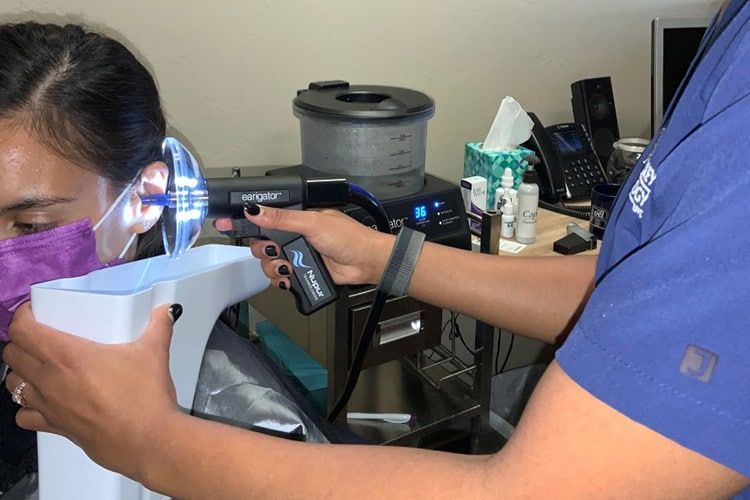
In some cases, treating an underlying hearing issue can significantly reduce tinnitus symptoms. Where wax in ears symptoms are identified as a contributing factor, professional ear wax removal in Ealing can often provide swift relief.
Even when stress appears to be a major trigger, proper assessment is still important because persistent tinnitus should not simply be ignored. A qualified hearing specialist offering ear wax removal in Ealing can rule out physical causes before any management plan is put in place.
What Can Help Reduce Stress-Related Tinnitus?
Although tinnitus cannot always be eliminated completely, many people find symptoms become much easier to manage once stress and anxiety are addressed properly.
Helpful approaches may include:
- Improving sleep habits
- Reducing caffeine or alcohol triggers
- Sound therapy or background noise
- Relaxation techniques
- Managing workplace stress
- Regular hearing assessments
- Treating hearing loss where present
For some patients, simply understanding why tinnitus fluctuates can make the condition feel far less frightening.
At Ealing Hearing Centre, hearing assessments help identify possible causes of tinnitus and determine whether hearing loss, wax build-up, or other auditory factors may be contributing to the symptoms. As a trusted hearing centre near me for patients across West London, the team offers ear wax removal in Ealing alongside full diagnostic assessments. Early assessment can help patients better understand their hearing health and explore appropriate next steps before tinnitus becomes increasingly disruptive.