
Ear Wax Removal London Safe and Effective Ear Wax Removal Services

Aarti Raicha • March 24, 2025

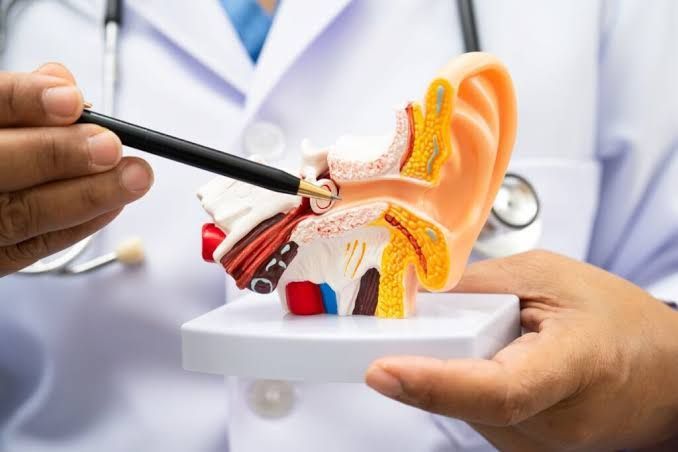
Ear wax which is also known as ceruman, is a naturally occurring substance that is produced by the glands located in the ear canal inside our ears. It is produced to protect and lubricate our ears to prevent dust, bacteria and other foreign particles from entering and damaging our ears. 


However, when ear wax accumulates excessively inside our ears, it can lead to hearing loss, discomfort and other complications. There are many clinics that offer professional
ear wax removal services to address these issues safely and effectively in London.


In this blog, we will understand the importance of proper ear care and why professional ear wax removal London is highly recommended to ensure the safety of your ears and hearing capacity.


What Are the Methods of Ear Wax Removal?


Professional clinics in London use various methods and techniques to remove your ear wax safely:


Microsuction


It is a technique that uses gentle suction to remove your ear wax. An experienced clinician uses a microscope to see your ear canal and then uses a small suction device to extract your ear wax. This method is considered a safe, comfortable and effective technique to remove the ear wax without any complications.


Irrigation


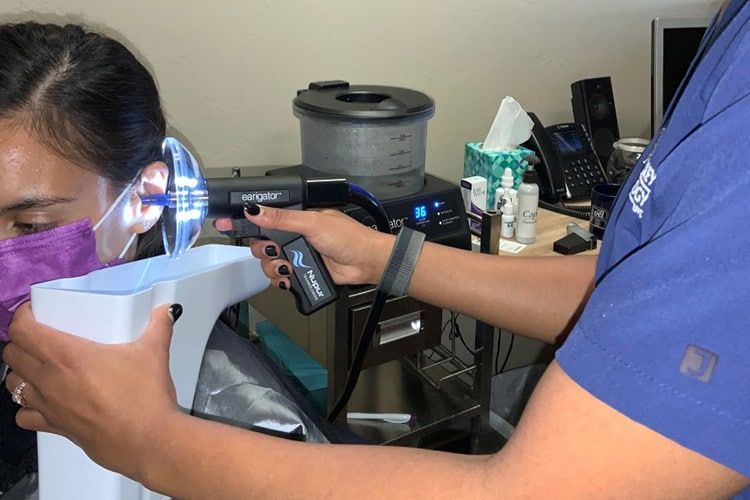
This technique involves flushing your ear canal with water to dislodge and remove the ear wax removal London. It might not be suitable for everyone, especially the people who have certain ear conditions. It is advised that this method should only be performed by a professional to minimise the risk of ear damage.


Manual Removal


Clinicians may use specialised instruments to manually remove your ear wax in some specific cases. This method requires a very steady hand and the expertise to avoid damaging your ear.


What is the Importance of Professional Ear Wax Removal?


Ears are considered one of the most sensitive parts of our body and cleaning them is of course one of the most risky things to do. That is why looking for professional help to remove your ear wax in London makes sure that the procedure is performed safely and with utmost care.


The doctors or the professionals will assess the conditions of your ear and will advise you the most appropriate method to remove your ear wax. Attempting  to remove your ear wax at home can lead to major complications such as pushing the wax way deeper which can cause impaction or may damage your ear canal.


Moreover, professional clinics stick to strict hygiene standards to reduce the risk of infections. They also provide personalised advice on how to maintain your ear health and prevent future build-ups.


Ealing Hearing Centre: The Best Trusted Ear Care Provider


Ealing Hearing Centre offers comprehensive and personalised hearing care services including professional ear wax removal London. With over 35 years of experience in this field, the father-daughter duo of audiologists provide patient centred care which is tailored to your specific needs.


This hearing centre offers you various services such as hearing aids, ear wax removal London and hearing consultations. They truly pride themselves on delivering high quality ear care which make sure that each of their patients receive personalised attention from start to finish of their treatment.


Their approach emphasises on empathy with no rush in order to allow them for thorough assessments and careful treatment of every patient.


Ealing Hearing Centre is easily accessible for the people who are looking for the best ear wax removal London. Their commitment to improve the quality of life of their patients through bespoke hearing care has made them a trusted choice for ear health services by thousands.


Conclusion


Proper ear care is very important to maintain good hearing health. Excessive ear wax build up can give you hearing issues and discomfort in your ear but professional ear wax removal London services offer you safe and effective solutions for your ear wax removal procedure.


Trying to remove your wax at home can be very risky as you can damage your ear canal and ear drum but by looking for professional help to remove your ear wax, you not only prevent infections inside your ears but your hearing capacity will also not deteriorate.


By choosing professional services offered by Ealing Hearing Centre, you can maintain the health of your ears to their optimum level and enjoy a better quality of life.

By Aarti Raicha May 21, 2026
At Ealing Hearing Centre, hearing assessments help identify possible causes of tinnitus and determine whether hearing loss, or other auditory factors may be contributing to the symptoms.
By Aarti Raicha April 29, 2026
Ear wax removal is the most common ENT procedure in the UK primary care, carried out four million times a year . Most of them spent weeks trying to solve it themselves first, trying anything and everything from olive oil drops to over-the-counter ear sprays, tilting their heads in the shower, even cotton buds, but the ear stayed blocked. This is the point where most people start wondering whether something else is going on, or whether they just need to try harder with the drops. How long does earwax take to clear on its own? For mild build-up, a week or two of olive oil drops is usually enough to soften the wax and let the ear's natural self-cleaning process do the rest. The skin inside your ear canal moves slowly outward, carrying wax with it, and a little help from drops can be enough to keep things moving. The trouble is that this process works best on wax that hasn't yet compacted. Once wax has been sitting in the ear canal long enough to harden — pressed against the eardrum, filling the canal — softening drops change its texture without changing its position. It becomes softer wax in the same place, and the muffling continues. Does olive oil actually remove earwax? Not on its own, no — and this is where a lot of people lose weeks on a method that was never going to be enough. Olive oil is a softening agent, not a removal method. For fresh, mild blockages, it can assist the ear in clearing itself, but for anything more established, it is a preparation step at best, and using it alone can give a false sense that something is being done when the blockage isn't actually shifting. The other thing worth knowing is that over-softened wax can spread across the eardrum rather than moving outward, temporarily making hearing worse before it gets better. If your ear has felt more blocked since you started the drops, that is likely what is happening. Can cotton buds make earwax worse? Consistently, yes. The ear canal narrows as it goes deeper, and cotton buds tend to push wax toward that narrower section rather than drawing it out. What begins as a soft or moderate build-up near the outer canal can become a firmly compacted plug sitting directly against the eardrum after a few attempts. The ear that felt manageable before often feels significantly worse afterwards, which is usually what finally sends people to a clinic. What is microsuction ear wax removal ? Microsuction is the method most audiologists now use as standard, and the reason it works where home methods don't comes down to one thing: direct vision. The clinician looks inside the ear canal with magnification throughout the entire procedure, which means they can see exactly where the wax is, how it's sitting, and what's happening as it's removed. The wax is cleared using gentle suction — no water, no flushing, no pressure against the eardrum. For most people, it takes around twenty minutes, and the change is immediate. The pressure lifts, sounds come back in clearly, and the fullness that had become background noise is simply gone. When should you see a professional for a blocked ear? If you have been using drops consistently for two weeks and the ear hasn't cleared, it is unlikely to clear on its own at that point. The same is true if the blockage keeps returning every few months — that pattern doesn't resolve with drops, it just repeats. At Ealing Hearing Centre, we examine the ear canal before anything else, so we know exactly what we're dealing with before we proceed. If wax is present and safe to remove, it's cleared the same day. Call 0800 002 5777 or book online at ealinghearing.co.uk.
By Aarti Raicha April 23, 2026
In a survey of nearly 500 patients with confirmed earwax blockage, over 60% described their symptoms as very or extremely bothersome — and most of them had been living with those symptoms for weeks before seeking help, not because they weren't bothered enough to act, but because they didn't know what they were dealing with. By the time most people book an appointment, they've already quietly adapted to hearing less than they should. 5 Signs You've Had Earwax Buildup for Too Long 1. Muffled hearing that won't clear Earwax blockage rarely starts dramatically. It's slow dimming — a conductive hearing loss, meaning sound is physically blocked before it reaches the eardrum rather than the eardrum itself being damaged. Most people don't notice how much their hearing has shifted until something forces the comparison — a phone call that feels harder to follow than it used to, a conversation in a noisy room that requires more concentration than it should, a moment where someone repeats themselves, and you realise it's been happening more often than you've been willing to admit. One patient came in after a week of ringing in her ear, not entirely sure what the problem was, but it turned out to be earwax. What makes this symptom so easy to dismiss is that it develops gradually enough to feel normal. The brain adjusts, fills in the gaps, and stops flagging it as a problem. By the time most people act on it, the blockage has been building for weeks, sometimes months. That matters because the longer compacted earwax sits against the eardrum, the more firmly it sets, and the harder it becomes to shift without professional removal. The hearing loss itself is entirely reversible once the wax is cleared, and sound comes back in fully. But that can only happen once someone looks inside the ear. 2. Ringing in the ears that keeps coming back When compacted earwax sits directly against the eardrum, the pressure interferes with how the ear processes sound and can trigger tinnitus — the persistent ringing, buzzing, or low hum that seems to come from inside the ear itself. In the same survey, half of all patients with earwax blockage were experiencing tinnitus alongside their hearing difficulty, and most had been managing the ringing for weeks, assuming it was a separate, unrelated problem. That assumption is understandable. Tinnitus has a reputation as a standalone condition, something brought on by loud noise exposure or stress, and so people treat it accordingly — they look up coping strategies, download white noise apps, wait for it to pass. What they don't consider is that the ringing started around the same time their hearing felt slightly off, which is usually the clearest indicator that earwax is involved. Earwax-related tinnitus typically resolves the moment the blockage is cleared. People who had quietly accepted a permanent ringing often find it gone entirely after a single microsuction appointment, which is a significant thing to have spent weeks worrying about unnecessarily.\ 3. A feeling of fullness or pressure in the ear The sensation of fullness or pressure in the ear — the same feeling you get stepping off a flight or surfacing after a swim — is one of the most consistently misread earwax symptoms there is. Because it isn't painful, it tends to get blamed on sinus congestion, a cold that hasn't fully cleared, or jaw tension, and then tolerated for far longer than it should be. It's worth understanding what's actually happening. Earwax is physically occupying space inside the ear canal, and the pressure is the ear's response to being blocked. It doesn't fluctuate the way sinus pressure does — it doesn't ease when you blow your nose or improve as a cold clears up. It stays at roughly the same level, day after day, until the blockage is removed. People who have been attributing it to their sinuses for three weeks and wondering why nothing is shifting are usually dealing with earwax, not congestion. The distinction matters because the treatments are completely different. Decongestants won't touch an earwax blockage. Neither will waiting it out. 4. Unexplained dizziness or balance issues The ear does more than hear — it also governs balance through the vestibular system, and when compacted earwax presses against the eardrum, it can send confusing signals that produce a mild but persistent sense of being slightly off-kilter or lightheaded. It's less common than the other symptoms on this list, but it's a recognised consequence of earwax impaction that regularly gets attributed to entirely unrelated causes — dehydration, tiredness, low blood pressure, and not eating enough. The pattern that tends to give it away is that the dizziness has no other obvious explanation and coincides with other ear-related symptoms. If the ear feels full, hearing feels slightly reduced, and there's also an unsteady feeling that comes and goes, the ear should be the first thing checked rather than the last. A straightforward look inside the canal can confirm or rule out earwax as the cause in under a minute. 5. Struggling to follow conversations This is the quietest symptom and, according to RNID research , one of the most consequential — one in five people with untreated earwax blockage reported poor mental health and feelings of isolation as a direct result. That figure is worth sitting with, because it describes something that starts small and compounds quietly over time. When hearing becomes an effort, people start pulling back without fully realising it. Group conversations become harder to navigate, so they participate less. Restaurants and busy social settings feel more exhausting than enjoyable, so they get avoided. Phone calls require more concentration than they used to, so they get put off. None of these individual decisions feels significant in the moment — they feel like reasonable responses to circumstances — but taken together, they represent a gradual withdrawal from things that matter. The cause, in many of these cases, is a blockage that takes around twenty minutes to clear. When Should You Do Something About It? If you recognise more than one of the symptoms above and they've been present for more than a couple of weeks, earwax is unlikely to clear on its own at that point. Olive oil drops can help with mild, early-stage build-up, but once earwax has compacted against the eardrum it needs to be physically removed rather than softened. At Ealing Hearing Centre, we look inside the ear before doing anything else — confirming what's there and how best to treat it. If earwax is the cause, microsuction clears it the same day, and the difference is usually immediate. Call 0800 002 5777 or book online at ealinghearing.co.uk.