What Happens During a Hearing Test in London and When You Should Actually Book One
According to the RNID, the average person in the UK waits ten years between first noticing symptoms of hearing loss and actually doing something about it. A 2024 analysis published in the International Journal of Audiology, drawing on the most recent UK census data, found that as many as one in three adults aged 18 to 80 has some degree of hearing loss, and most of them have not had it assessed.
If you have been putting off a hearing test in London, this article covers what a professional assessment involves, what it can identify, and how to know when it is time to book one.
Why people put off hearing tests
Hearing loss tends to develop gradually, which makes it easy to adjust to rather than address. The brain compensates over time, filling in gaps in conversation or sound. By the time the problem becomes obvious to other people, it has often been present for years.
There is also a common assumption that hearing tests are only for older people, or only necessary once hearing has deteriorated significantly. Neither is accurate. Hearing assessments are useful at any age and often identify issues that are straightforward to address when caught early.
What a hearing test actually involves
A professional hearing assessment is not a single test. It is a structured process designed to build an accurate picture of how the ears and auditory system are functioning. At a hearing centre in London such as Ealing Hearing Centre, appointments typically include the following:
Initial consultation
Before any testing begins, the audiologist will ask about your hearing history, any specific symptoms you have noticed, your noise exposure history, and any relevant medical background. This helps place the test results in proper context rather than treating the numbers in isolation.
Ear examination
The audiologist will examine the ear canal and eardrum using an otoscope. This step is important because a number of common issues, including ear wax build-up, can affect test results or require treatment before accurate testing is possible. Wax in ears symptoms such as muffled hearing or a feeling of fullness can mimic hearing loss, and identifying this early prevents unnecessary concern or misinterpretation.
Pure tone audiometry
This is the core of most hearing assessments. You will wear headphones and respond to a series of tones played at different frequencies and volumes. The results are plotted on an audiogram, which maps the quietest sounds you can hear across a range of pitches. The pattern this produces tells the audiologist a great deal about the nature and degree of any hearing loss.
Speech recognition testing
Pure tone results show what you can hear in terms of volume and frequency, but speech recognition testing shows how well the brain processes what it hears. Two people with similar audiograms can have very different experiences of conversation, particularly in noisy environments, and this test helps explain that gap.
Tympanometry
This measures how well the eardrum and middle ear are functioning by creating small changes in air pressure in the ear canal. It helps identify issues such as fluid behind the eardrum or problems with the middle ear bones, which would not be detected by tone testing alone.
What happens after the test
Once the assessment is complete, the audiologist will explain the results clearly and in plain terms. If no hearing loss is detected, you will leave with a clear baseline and confidence that things are functioning as they should. If hearing loss is identified, the audiologist will explain its degree and nature, and discuss the options available, whether that means monitoring, treatment, hearing aids, or a referral.
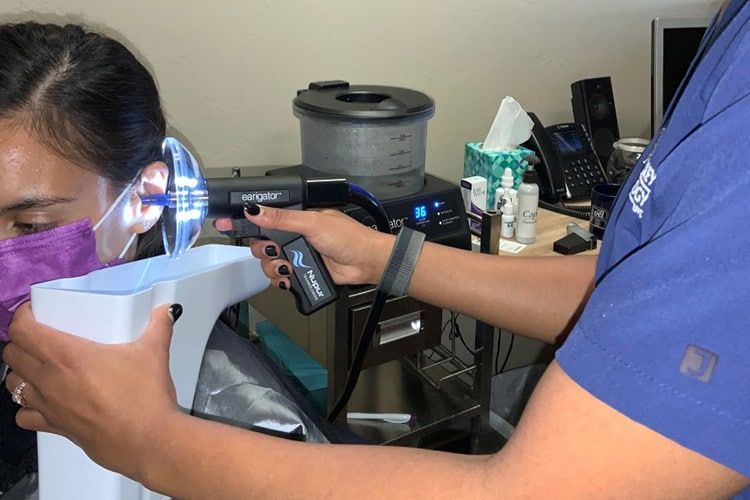
If wax build-up is identified during the examination, ear wax removal in Ealing can often be carried out at the same appointment or arranged promptly, removing a potential barrier to accurate results and immediate comfort.
When you should actually book a hearing test in London
There is no single threshold that makes a hearing test necessary. The following situations are all reasonable reasons to book an assessment:
- You frequently ask people to repeat themselves, particularly in background noise
- You find phone calls, television, or group conversations harder to follow than they used to be
- You have noticed ringing, buzzing, or other sounds in your ears that others cannot hear
- Someone close to you has commented on your hearing
- You have a history of significant noise exposure through work or leisure
- Your hearing feels muffled or blocked and it has not cleared on its own
- You have not had a hearing test before and want to establish a baseline
Hearing tests in Stanmore are available at Ealing Hearing Centre for patients based in and around the Stanmore area, alongside appointments for patients across West London.
Why earlier is better
The relationship between untreated hearing loss and wider health outcomes is increasingly well documented. Research has identified associations between persistent untreated hearing loss and cognitive decline, social withdrawal, and reduced quality of life. The earlier hearing loss is identified and addressed, the greater the opportunity to manage those downstream effects.
There is also a practical dimension. Hearing aids and other interventions work more effectively when fitted earlier, before the auditory pathways have spent years compensating for diminished input. A test that comes back with no concerns is still a useful data point. A test that identifies a problem early gives you options that may not be available later.
What if ear wax is the problem rather than hearing loss?
Not every hearing difficulty signals permanent loss. Ear wax build-up is one of the most common and most overlooked causes of muffled hearing, and it is entirely reversible. If you have been putting off a hearing test because you suspect wax may be involved, the answer is still to get assessed rather than to wait.
For patients who cannot easily travel to a clinic, mobile earwax removal brings professional assessment and treatment directly to the home. The same standard of care applies, with otoscopic examination carried out before any wax removal takes place.
Same-day ear wax removal in Stanmore is available for patients in the area who need prompt relief from blocked hearing or discomfort, without having to travel into central London.
Book a hearing assessment at Ealing Hearing Centre
Ealing Hearing Centre provides hearing tests in London for patients across West London and the surrounding areas, including Stanmore, Ruislip, and Ealing. Appointments include full audiological assessment, otoscopic examination, and clear explanation of results. Where ear wax removal in Ealing is needed as part of the appointment, this can typically be arranged on the same day.
If you have been uncertain about whether your hearing warrants attention, an assessment will give you a clear answer either way. Early review is almost always the better option.
According to the RNID, the average person in the UK waits ten years between first noticing symptoms of hearing loss and actually doing something about it. A 2024 analysis published in the International Journal of Audiology, drawing on the most recent UK census data, found that as many as one in three adults aged 18 to 80 has some degree of hearing loss, and most of them have not had it assessed.
If you have been putting off a hearing test in London, this article covers what a professional assessment involves, what it can identify, and how to know when it is time to book one.
Why people put off hearing tests
Hearing loss tends to develop gradually, which makes it easy to adjust to rather than address. The brain compensates over time, filling in gaps in conversation or sound. By the time the problem becomes obvious to other people, it has often been present for years.
There is also a common assumption that hearing tests are only for older people, or only necessary once hearing has deteriorated significantly. Neither is accurate. Hearing assessments are useful at any age and often identify issues that are straightforward to address when caught early.
What a hearing test actually involves
A professional hearing assessment is not a single test. It is a structured process designed to build an accurate picture of how the ears and auditory system are functioning. At a hearing centre in London such as Ealing Hearing Centre, appointments typically include the following:
Initial consultation
Before any testing begins, the audiologist will ask about your hearing history, any specific symptoms you have noticed, your noise exposure history, and any relevant medical background. This helps place the test results in proper context rather than treating the numbers in isolation.
Ear examination
The audiologist will examine the ear canal and eardrum using an otoscope. This step is important because a number of common issues, including ear wax build-up, can affect test results or require treatment before accurate testing is possible. Wax in ears symptoms such as muffled hearing or a feeling of fullness can mimic hearing loss, and identifying this early prevents unnecessary concern or misinterpretation.
Pure tone audiometry
This is the core of most hearing assessments. You will wear headphones and respond to a series of tones played at different frequencies and volumes. The results are plotted on an audiogram, which maps the quietest sounds you can hear across a range of pitches. The pattern this produces tells the audiologist a great deal about the nature and degree of any hearing loss.
Speech recognition testing
Pure tone results show what you can hear in terms of volume and frequency, but speech recognition testing shows how well the brain processes what it hears. Two people with similar audiograms can have very different experiences of conversation, particularly in noisy environments, and this test helps explain that gap.
Tympanometry
This measures how well the eardrum and middle ear are functioning by creating small changes in air pressure in the ear canal. It helps identify issues such as fluid behind the eardrum or problems with the middle ear bones, which would not be detected by tone testing alone.
What happens after the test
Once the assessment is complete, the audiologist will explain the results clearly and in plain terms. If no hearing loss is detected, you will leave with a clear baseline and confidence that things are functioning as they should. If hearing loss is identified, the audiologist will explain its degree and nature, and discuss the options available, whether that means monitoring, treatment, hearing aids, or a referral.
If wax build-up is identified during the examination, ear wax removal in Ealing can often be carried out at the same appointment or arranged promptly, removing a potential barrier to accurate results and immediate comfort.
When you should actually book a hearing test in London
There is no single threshold that makes a hearing test necessary. The following situations are all reasonable reasons to book an assessment:
- You frequently ask people to repeat themselves, particularly in background noise
- You find phone calls, television, or group conversations harder to follow than they used to be
- You have noticed ringing, buzzing, or other sounds in your ears that others cannot hear
- Someone close to you has commented on your hearing
- You have a history of significant noise exposure through work or leisure
- Your hearing feels muffled or blocked and it has not cleared on its own
- You have not had a hearing test before and want to establish a baseline
Hearing tests in Stanmore are available at Ealing Hearing Centre for patients based in and around the Stanmore area, alongside appointments for patients across West London.
Why earlier is better
The relationship between untreated hearing loss and wider health outcomes is increasingly well documented. Research has identified associations between persistent untreated hearing loss and cognitive decline, social withdrawal, and reduced quality of life. The earlier hearing loss is identified and addressed, the greater the opportunity to manage those downstream effects.
There is also a practical dimension. Hearing aids and other interventions work more effectively when fitted earlier, before the auditory pathways have spent years compensating for diminished input. A test that comes back with no concerns is still a useful data point. A test that identifies a problem early gives you options that may not be available later.
What if ear wax is the problem rather than hearing loss?
Not every hearing difficulty signals permanent loss. Ear wax build-up is one of the most common and most overlooked causes of muffled hearing, and it is entirely reversible. If you have been putting off a hearing test because you suspect wax may be involved, the answer is still to get assessed rather than to wait.
For patients who cannot easily travel to a clinic, mobile earwax removal brings professional assessment and treatment directly to the home. The same standard of care applies, with otoscopic examination carried out before any wax removal takes place.
Same-day ear wax removal in Stanmore is available for patients in the area who need prompt relief from blocked hearing or discomfort, without having to travel into central London.
Book a hearing assessment at Ealing Hearing Centre
Ealing Hearing Centre provides hearing tests in London for patients across West London and the surrounding areas, including Stanmore, Ruislip, and Ealing. Appointments include full audiological assessment, otoscopic examination, and clear explanation of results. Where ear wax removal in Ealing is needed as part of the appointment, this can typically be arranged on the same day.
If you have been uncertain about whether your hearing warrants attention, an assessment will give you a clear answer either way. Early review is almost always the better option.