The Difference Between ‘Blocked’ Hearing and Actual Hearing Loss
When your hearing changes, the first instinct is usually to describe the feeling rather than the cause. Most people don’t say “I think I have hearing loss.” They say their ear feels blocked, or that things sound slightly off, as though something is dulling the clarity of sound.
That distinction matters more than it seems. A blocked sensation can come from something simple and temporary, or from something that requires longer-term management. The difficulty is that, early on, they can feel almost identical.
Does blocked hearing mean I have hearing loss?
Not necessarily. “Blocked” is a subjective feeling, not a diagnosis, and it often points to a physical issue rather than a permanent one.
In many cases, that sensation is caused by ear wax sitting in the canal and interfering with how sound reaches the eardrum. Because the obstruction is physical, the change in hearing can feel sudden, sometimes even happening overnight.
Hearing loss behaves differently. It tends to develop gradually, which makes it harder to notice at first. Instead of a clear shift, there’s a slow change in how easily you follow conversations, particularly in environments where there’s background noise.
So, while both can feel similar in the moment, the timeline usually gives them away—one is often abrupt, the other progressive.
How does ear wax affect hearing compared to hearing loss?
Ear wax affects hearing by creating a barrier. Sound waves are partially blocked from reaching the eardrum, which reduces both volume and clarity in a uniform way. People often describe this as a fullness in the ear, or as though they’re hearing everything through a layer of cotton.
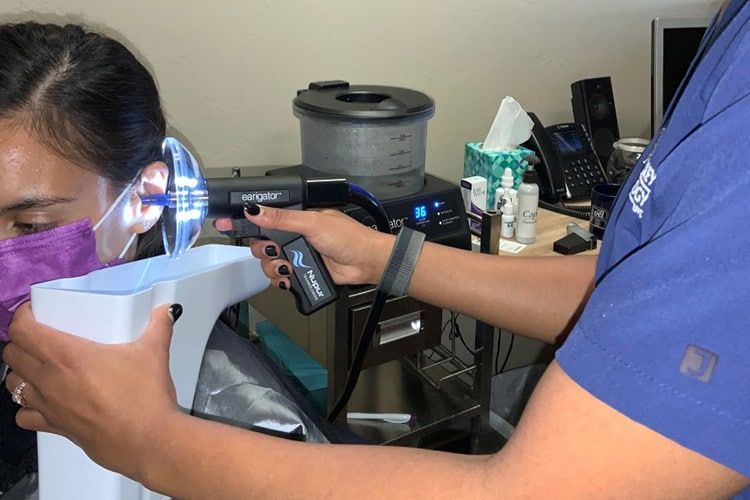
Because the issue is mechanical, removing the obstruction usually restores hearing quickly. This is why professional ear wax removal in Ealing can feel almost immediate in its effect when wax is the underlying cause.
Hearing loss, on the other hand, is not about blockage. The ear canal is clear, but the inner ear or auditory system isn’t processing sound as effectively as it should. Instead of everything sounding quieter, certain sounds—especially speech—lose definition.
That difference is subtle but important. With wax, sound is reduced. With hearing loss, sound is often present but less distinct.
Why does hearing loss feel like muffled or unclear speech instead of blockage?
Hearing isn’t detecting sound; it’s about distinguishing detail. Speech relies on the ability to pick up fine differences in frequency.
When hearing loss begins, those finer details are usually the first to be affected. As a result:
- Words may sound blurred together.
- Consonants become harder to distinguish.
- Conversations require more effort to follow.
This is why people often report that they can hear someone speaking but struggle to understand what’s being said, especially in busy environments.
That experience is different from a blocked ear, where everything tends to sound consistently reduced rather than selectively unclear.
Can ear wax and hearing loss feel the same at first?
Yes, and this is where most confusion happens.
Both conditions can lead to:
- Muffled sound
- Reduced clarity
- A sense that something isn’t quite right.
Without proper assessment, it’s easy to assume the simpler explanation—that it’s “just wax”—and delay further investigation. In some cases, that assumption turns out to be correct. In others, it leads to unnecessary delay in identifying hearing loss early.
The overlap in how they feel is exactly why relying on sensation alone isn’t reliable.
What’s the fastest way to tell the difference?
The most efficient way to separate the two is a structured assessment that removes guesswork entirely.
This usually involves:
- A visual examination of the ear canal to check for wax.
- Removal if a blockage is present.
- A hearing test if the ear is clear or if symptoms persist.
Hearing tests in Stanmore are designed to measure how well you hear across different frequencies, not just whether you can hear sound at all. This provides a detailed profile of your hearing, which makes it possible to identify even mild or early-stage changes.
Instead of interpreting symptoms, you’re working with measurable results.
Should I try wax removal first or book a hearing test?
In most situations, the two are part of the same process rather than separate decisions.
The logical sequence is:
- Check for wax.
- Remove it if necessary.
- Reassess hearing!
If the issue resolves after removal, no further action may be needed. If it doesn’t, a hearing test provides clarity on what’s happening next.
Skipping straight to assumptions—either ignoring the issue or treating it as wax without confirmation—tends to prolong uncertainty rather than resolve it.
The key difference comes down to cause, not just feeling.
A blocked sensation can be misleading because it describes how hearing feels, not why it feels that way.
- If something is physically in the way, removing it should restore normal hearing.
- If the issue lies in how sound is processed, it requires a different approach.
Understanding that distinction early prevents unnecessary trial and error and ensures that the right solution is applied from the start.
If your hearing feels blocked, muffled, or less clear than usual, Ealing Hearing Centre can assess whether the cause is wax-related or something more complex, and guide you toward the right next step with clarity.