4 Types of Ear Wax Removal Available in London (And Which One You Actually Need)
If you've searched for
ear wax removal in London, you've probably noticed how many different methods clinics advertise. Microsuction, irrigation, syringing, manual removal with curettes, it can be hard to know which one applies to you, and whether the method matters as much as the provider offering it. This guide walks through what each option actually involves, so you know what to expect before you book.
Why Method Matters More in a City Like London
London has one of the highest concentrations of hearing and ear care clinics in the UK, which is good for choice but can make comparing providers confusing. Some clinics still use older methods like ear syringing, while most modern audiology and hearing centres, including ours, have moved to microsuction as the standard approach. Understanding the difference helps you ask the right questions when you call around.
Microsuction: The Current Standard
Microsuction uses a small suction device combined with a microscope or magnifying loupe, allowing the clinician to see directly into the ear canal while gently removing wax. There's no water involved, which is one of the main reasons it's replaced older methods.
What this means in practice:
- The procedure is dry, so there's a lower risk of infection compared to water-based methods.
- It's suitable for people with a history of ear infections, perforated eardrums, or grommets, where syringing would usually be ruled out.
- Most appointments take between 15 and 30 minutes, and many people feel relief immediately afterwards.
Ear Syringing and Irrigation: Still Used, But Less Common Now
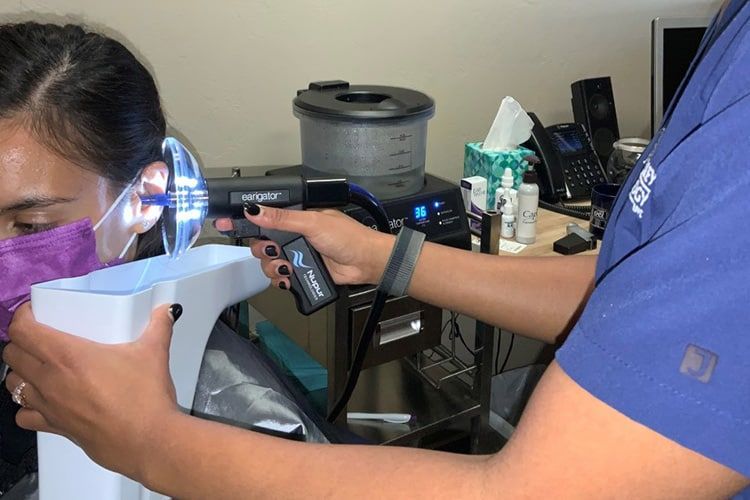
Syringing uses a pressurised stream of water to flush wax out of the ear canal. Irrigation is a gentler, electronically controlled version of the same idea. Both were once the default approach across GP surgeries and clinics, but they've become less common because of the risks involved when wax is very hard, impacted, or when there's any underlying ear condition.
If a clinic still offers this method, it's worth asking whether they've assessed your ear canal beforehand, since irrigation isn't always appropriate for every patient.
Manual Removal
Manual removal uses fine instruments, often under direct visualisation, to lift wax out without suction or water. It's typically used for wax near the ear canal entrance, or alongside microsuction when a small amount of stubborn wax remains.
What to Ask Before You Book in London
With so many providers across the city, a short conversation before booking can save you time and discomfort. Reasonable questions to ask include:
- Which method will be used, and is it suitable for your ear history?
- Is the clinician trained and insured specifically for ear wax removal?
- What happens if the wax is too hard or impacted to remove on the day?
A clinic that answers these clearly, without hesitation, is usually a good sign of experience.
When to Choose a Specialist Over a Walk-In Option
Walk-in ear care services have grown across London, and while convenient, not all of them offer the same level of assessment. If you have a history of ear infections, hearing aids, or previous eardrum issues, it's worth choosing a specialist clinic that can review your history properly rather than a same-day service with limited screening.
If you're comparing clinics across the city and want a clearer framework for making that decision, our earlier guide on
choosing ear wax removal in London without guesswork covers the decision-making side in more detail.
Booking Your Appointment
At Ealing Hearing Centre, we use microsuction as standard, carried out by trained clinicians who assess your ear canal before any removal begins. If you're dealing with blocked or uncomfortable ears, book a consultation and we'll talk you through what to expect based on your specific situation.