Mobile Earwax Removal for Elderly Parents: When to Book
If you've spent time with an older parent recently, you may have noticed a few small changes in how they're hearing. Perhaps the television is a little louder than it used to be, or they've asked you to repeat yourself more often than usual. It's easy to put this down to getting older, and sometimes that's part of it. Quite often, though, at least some of the problem is something much simpler to treat: a build-up of ear wax.
For many families, the harder part is getting a parent to an appointment. Travel can be tiring, mobility may be limited, and some older people would rather put up with muffled hearing than make the trip. That's where mobile earwax removal helps, because it brings the same professional treatment to their home.
In this guide, we'll explain why ear wax tends to build up more in later life, which signs to look out for, and when a home visit makes more sense than a clinic appointment. We'll also walk you through what happens on the day, so you know what to expect before you book.
Why do older people get more ear wax build-up?
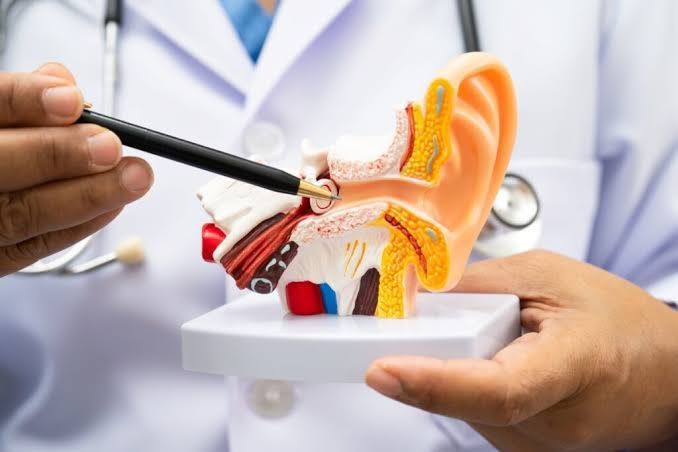
Ear wax is normal, and in most people it gradually works its way out of the ear on its own. As we get older, though, that natural process tends to slow down. The wax can become drier and harder, and the ear canal is less effective at moving it along, so it's more likely to collect and form a blockage.
Hearing aids add to this. Because a hearing aid sits in the ear canal for most of the day, it can stop wax from escaping and push some of it further in. That's why older adults and hearing aid users are among the groups most affected by wax build-up, according to a review in the British Journal of General Practice. We've explained this in more detail in why hearing aid users build up earwax faster.
What are the signs a parent has wax in their ears?
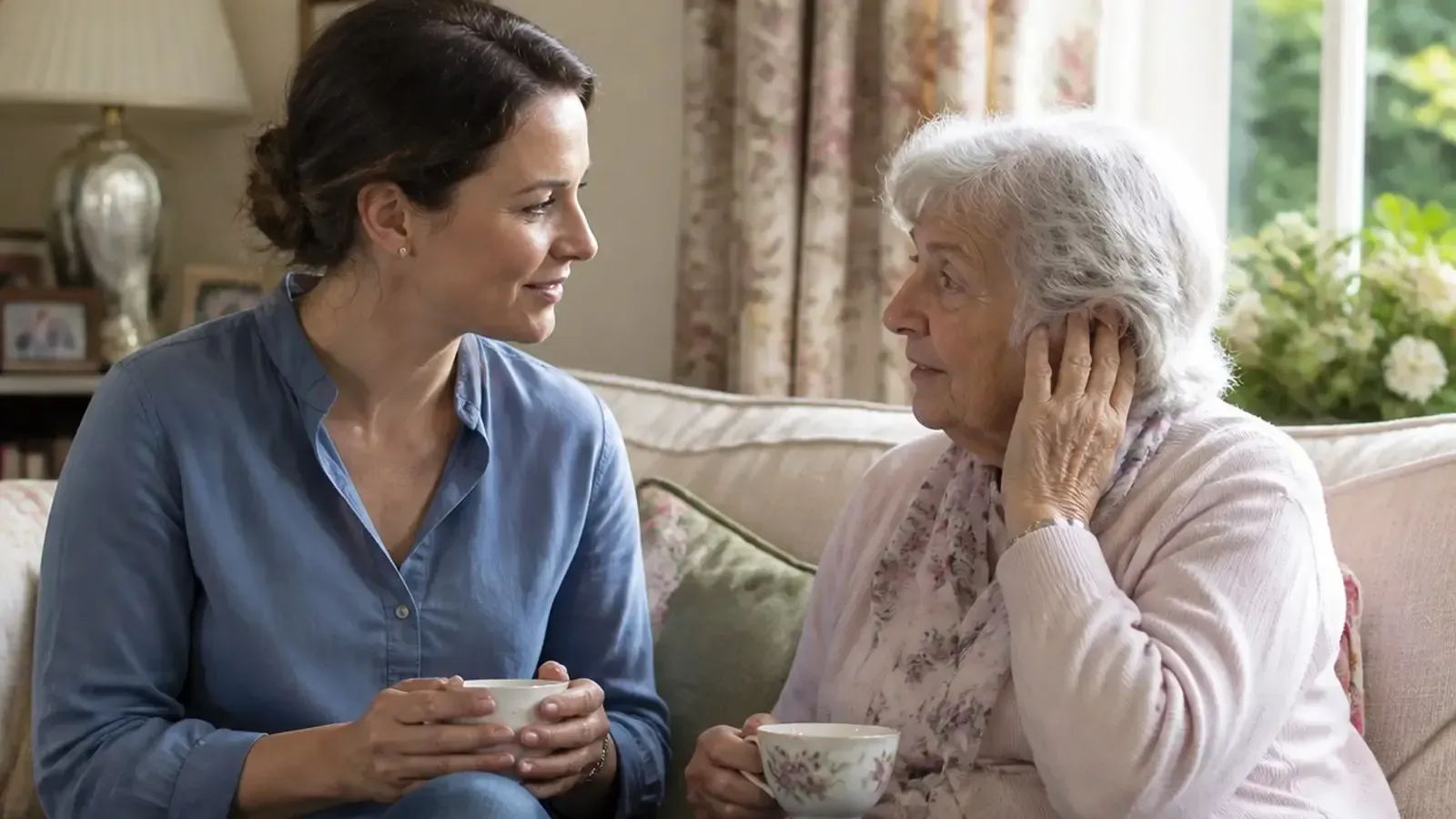
Because the change is usually gradual, older people don't always notice it themselves. You may well be the first to pick up on it, particularly if you haven't seen them for a few weeks. The most common signs are:
- Muffled hearing, often with the TV or radio turned up louder than before.
- A blocked or full feeling, which people sometimes describe as cotton wool in the ear.
- Itching or mild discomfort inside the ear.
- Ringing or buzzing(tinnitus) that wasn't there before.
- Hearing aids that whistle or sound weak, because wax is blocking the sound.
- Feeling slightly off balance, although dizziness can have other causes and is worth mentioning to their GP.
Our guide to wax in ears symptoms covers the signs people most often blame on something else. It's equally important to know when it might not be wax. Ear pain, discharge, or a sudden loss of hearing in one ear needs medical advice first, so in those cases contact their GP or NHS 111.
Can't their GP remove the wax?
In the past, many people would simply have had their ears syringed at the GP surgery. In many areas, that's no longer an option. The NHS notes that not all GP surgeries remove ear wax, and RNID has reported that millions of people no longer have a local NHS service. As a result, more families are turning to private treatment, and for an older relative, a home visit is often the most practical route.
When is mobile earwax removal the better option?
A clinic appointment works well for many people, and if your parent is happy to travel, our clinics in Ealing and Stanmore are always open to them. A home visit tends to make more sense when getting there is the main obstacle.
| If your parent… | Clinic appointment | Mobile earwax removal |
|---|---|---|
| Gets about easily | Works well | Not usually necessary |
| Has limited mobility, or uses a frame or wheelchair | Can be tiring | Much easier |
| Is recovering from illness or an operation | May mean waiting | Treated at home, if suitable |
| Lives with dementia or feels anxious in new places | Unfamiliar setting | Familiar surroundings |
| Relies on you for lifts | You need time off to take them | You can be there without the journey |
What happens during a home visit?
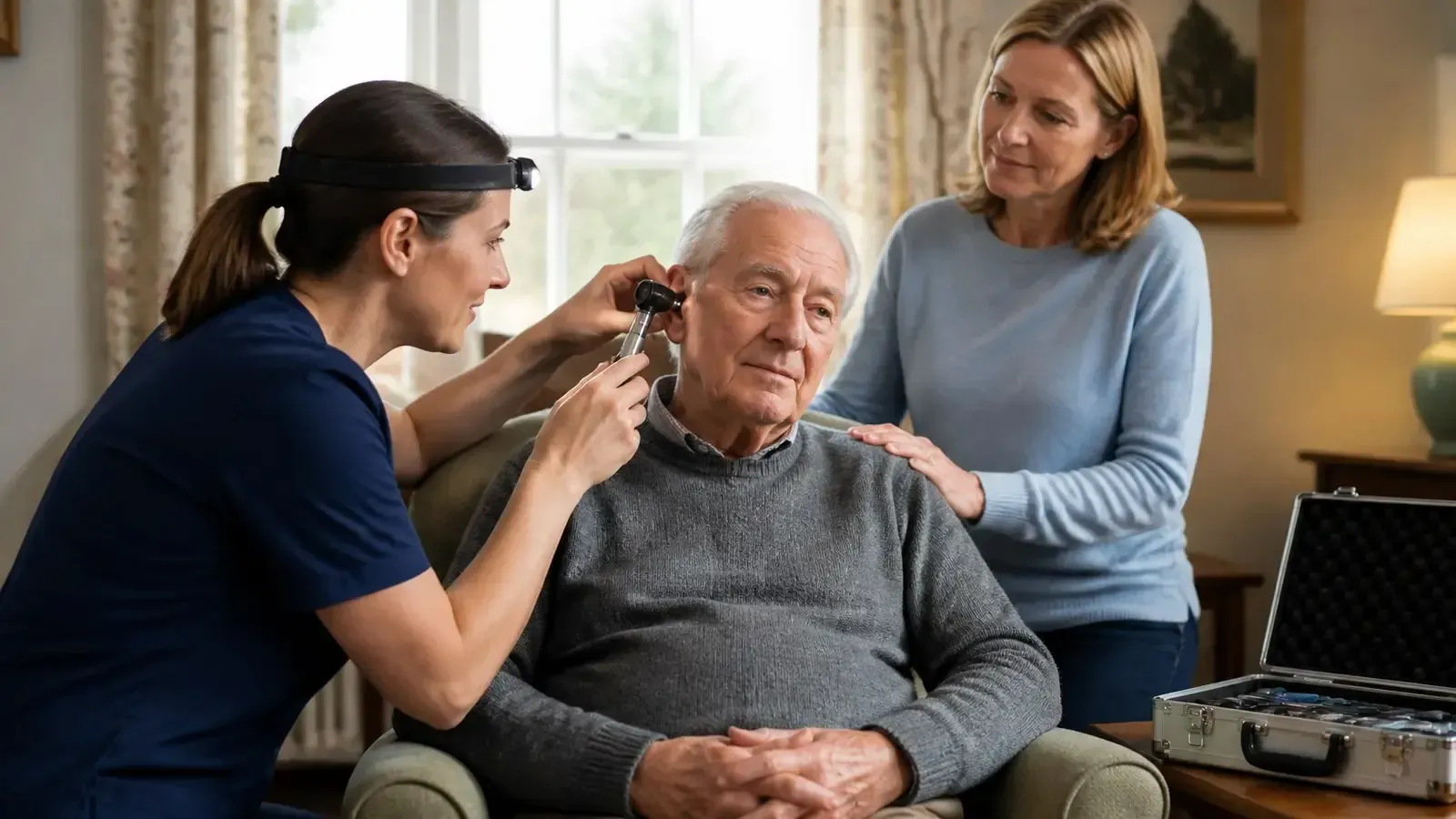
A home visit follows the same steps as an appointment in clinic, so the standard of care doesn't change. Our wax removal is carried out by qualified audiologists, and you're welcome to be there, which many families find reassuring.
- A short conversation first. We ask about their general health, medication, any ear surgery or infections, and whether they wear hearing aids.
- A look inside the ears. We examine both ears before doing anything else. If the problem isn't wax, or there are signs of infection, we won't go ahead and will explain what to do next.
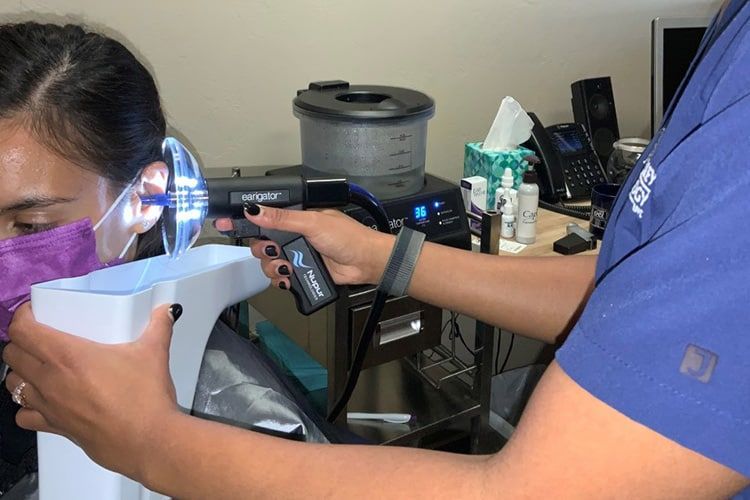
- Removing the wax. We normally use microsuction, which gently lifts the wax out with a small suction tip. It's noisy but not usually painful. If the wax is very hard, we may suggest softening drops for a few days and coming back.
- A final check and advice. We look again to make sure the ear is clear, then explain how to keep wax from building up and how to look after any hearing aids.
For a fuller step-by-step, see how mobile earwax removal works.
How do you suggest it to a parent?
Even when the solution is simple, raising it can feel awkward. It helps to keep the conversation light and practical rather than focusing on their hearing. You might say that their ears seem a bit blocked and that someone can come to the house to check them, which is much easier to hear than a suggestion that they're "going deaf". Offering to book the visit, and to be there on the day, takes most of the effort away.
If their hearing still isn't right once the wax has been cleared, that's useful to know too. In that case, a hearing consultation can show whether anything else is going on.
Frequently asked questions
Is mobile earwax removal safe for elderly people?
Yes, when it's carried out by a trained professional who examines the ears first. Microsuction doesn't use water, and if it isn't suitable for a particular ear, the audiologist will explain why.
How can I tell if my parent has ear wax build-up?
Common signs are muffled hearing, a blocked feeling, itching, ringing in the ears and hearing aids that whistle. Only an examination can confirm it.
Does the NHS still remove ear wax?
Some GP surgeries do, but many no longer offer it. Check with their surgery, which may refer them to another local service.
Should my parent use olive oil drops before a home visit?
Sometimes softening drops are advised for hard wax. Ask when you book rather than starting them yourself, and don't use drops if there's any chance of a perforated eardrum.
Can ear wax affect hearing aids?
Yes. Wax can block the part of the hearing aid that sends sound into the ear, making it sound weak or whistle. Regular ear checks help.
Can I be there during the appointment?
Yes. Family members are welcome, and it often helps your parent feel more relaxed.
Book Mobile Earwax Removal for Your Parent
If you've noticed signs of wax build-up in a parent, our audiologists can visit them at home. Get in touch to check we cover their area and to arrange a time that suits you both. You can also book ear wax removal in Ealing or Stanmore if they'd prefer to come to us, or call 0800 002 5777.
Or email Ealing Hearing Centre at info@ealinghearing.co.uk