
Hearing and Noisy Environments

Ealing Hearing Centre • August 21, 2022

No matter where we live, we often deal with noisy situations. It can be tricky to understand conversations in a noisy place with or without hearing challenges. The challenge is more impactful for deaf and hard-of-hearing individuals.

To combat such a beast, you merely need a boost in your hearing ability, and voila! Your conversation skills will improve, leaving a positive impact on your life.


Try the following tips to improve your hearing in a noisy environment.


Seek Your Audiologist's Help

First and foremost, seek help from your Audiologist like Sid and Sukhina, here at Ealing Hearing Centre. They may be able to adjust your hearing aid or suggest a different device to increase your hearing in a noisy environment.


Practice in Noisy Environments

Your hearing aid picks up many different sounds, both wanted and unwanted. While your hearing aid does the heavy lifting, it is up to you to separate noise from verbal conversation.


Practice talking with your friend while in a quiet environment. Later, try having a similar conversation in a busy environment. If you don't see immediate results, don't quit, your progress will likely be slow, but sure.


Learn From Others

It can be tiring when you start using hearing aids. At first, your brain will register many sounds, making the adjustment period challenging and overwhelming.


An Audiologist or other hearing professional can help you navigate this change. They might offer practical counsel about your experiences and expectations. Or they can put you in touch with people who've dealt with such situations. You might be surprised to discover a community of experienced users who come to your help. Get in touch with us to find out more.


Use Assistive Hearing Devices

An Audiologist might recommend supplementary devices to enhance the signal-to-noise ratio in rare cases of severe hearing deficit. This term refers to the difference between the noise and the speech signal. Typically, most people understand and hear speech better when the difference is bigger.

An Audiologist might successfully maximise the signal-to-noise ratio using assistive listening devices (like FM systems or remote microphones). These work together with hearing aids to achieve the desired effect. The speaker typically wears the devices; alternatively, they might pass the devices between speakers, thus sending the speaker's voice directly into the hearing aids.


Before adopting such a procedure, consult your Audiologist. Likely, your Audiologist will thoroughly examine the situation and which assistive devices may be best. Let us help you hear better, today.


A noisy environment is not the end of conversations for you. With the proper hearing aids and ample practice, you can easily keep up and interact with others. Please contact us at Ealing Hearing Centre today.

February 21, 2026
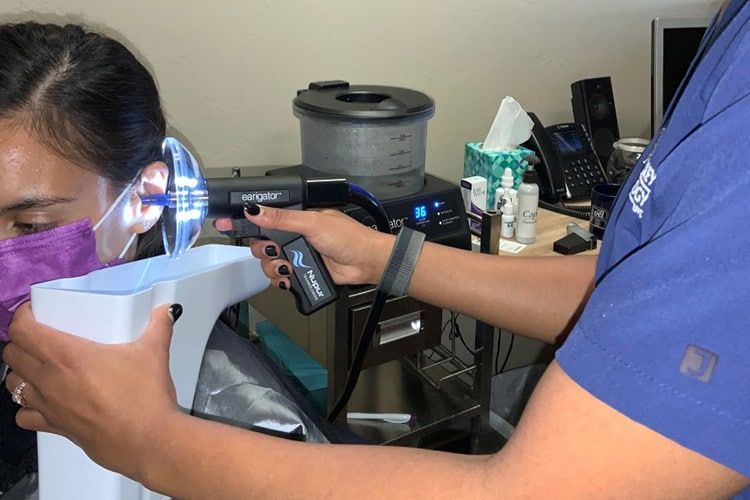
Waking up with a blocked ear is one of those highly specific, deeply irritating frustrations. You shake your head, yawn, swallow hard, and maybe tug at your earlobe, hoping for that satisfying ‘pop’ that clears your head. But nothing happens. Your hearing remains muffled, and it feels like you're walking around with your head completely underwater. When your ears reach this stage, waiting weeks for a routine appointment feels like a lifetime. You need relief, and you need it quickly so you can get back to normal life. That's exactly why same-day ear wax removal in Stanmore has become such a sought-after service for our local patients. Nobody wants to struggle through work meetings, family dinners, or simply watching the evening news while missing half the conversation. But how do you know if your symptoms require immediate professional attention, or if it's just a temporary quirk that will clear up on its own? Here are seven clear signs that it’s time to book an urgent appointment. 1. The Sudden Volume Drop One of the most obvious signs of a severe wax impaction is a sudden drop in your hearing ability. It rarely happens completely overnight; usually, the wax has been building up for months. But all it takes is a little bit of water from the shower or a restless night’s sleep to push that wax right against the eardrum, sealing the ear canal shut. Suddenly, you’re asking everyone to repeat themselves or turning the television volume up to uncomfortable levels for the rest of the house. 2. A Constant Sensation of Fullness Even if your hearing hasn’t completely dropped off, you might feel a heavy, dense sensation on one side of your head. Patients often describe this as feeling “stuffed up” or like they have a plug sitting deep inside their ear. Unlike the pressure you get from a head cold or flying on an airplane, this feeling doesn’t change when you pinch your nose and blow. It’s a physical blockage that needs to be physically removed. 3. The Unexpected Arrival of Tinnitus Most people think of tinnitus as that annoying ringing or buzzing in their ears that just won't go away. While there are plenty of reasons it happens, a lot of the time it’s just a buildup of hard earwax. When that wax gets stuck right against your eardrum, the pressure interferes with your inner ear and can cause phantom ringing or buzzing sounds. Getting the wax cleared often stops the ringing immediately. 4. Your Hearing Aids Are Acting Up If you wear hearing aids, earwax is your absolute worst enemy. When wax blocks the ear canal, the sound coming from your hearing aid’s speaker has nowhere to go. Basically, the sound hits that wall of wax and bounces right back into the microphone, that’s where that annoying high-pitched whistling comes from. If your hearing aids start acting up, sounding muffled, or dying way faster than they should, there’s a good chance your ear canal is just blocked up. 5. A Dull Ache That Won't Shift While earwax doesn’t typically cause the sharp, piercing pain of an ear infection, a severe impaction can become incredibly uncomfortable. As the wax hardens and dries out, it expands slightly, stretching the sensitive skin of the ear canal. This results in a persistent, dull ache that can sometimes radiate down into your jaw. 6. Persistent Itching Deep Inside We’ve all experienced an itchy ear, but when wax starts to dry out and flake off, it can rest against the tiny, sensitive hairs deep inside the ear canal. This creates a maddening tickle that you simply can’t reach. 7. Feeling Unsteady or Dizzy Your ears are responsible for your balance just as much as your hearing. When a hard plug of wax pushes against the eardrum, it can send confusing signals to your vestibular system. You might feel slightly off-balance, lightheaded, or unsteady on your feet. What to Expect from an Urgent Appointment If you’re nodding along to any of these symptoms, the safest route is professional microsuction. It’s the gold standard for clearing ears. Unlike the old-fashioned syringing methods that flushed water into the ear, microsuction acts like a tiny, precise vacuum cleaner. A trained audiologist investigates your ear with a high-powered microscope and gently lifts the wax away. The procedure is entirely dry, incredibly safe, and usually takes less than thirty minutes. What If the Wax Is Gone but You Still Can’t Hear? Sometimes, a patient comes in convinced that earwax is the root of all their problems. We clear the ear canals completely, and while the physical pressure disappears, their hearing remains slightly dull. This happens because a slow build-up of wax can mask natural, age-related changes in your hearing. When the wax is gone, the underlying hearing loss is suddenly obvious. If this is the case, the next logical step is to book comprehensive hearing tests in Stanmore . By sitting down for a proper audiometric assessment, we can map out exactly which sound frequencies you are missing and provide a tailored solution to get you back into the conversation. Conclusion Don't let blocked ears ruin your week. If you recognise the signs, seek safe, professional relief and get your hearing back on track today. Need relief today? Don't put up with blocked ears for another minute. Call Ealing Hearing’s Stanmore clinic on 0800 002 5777 or book your same-day appointment online. We'll have your ears cleared and feeling normal again in no time.
By Aarti Raicha February 4, 2026
People usually start looking for ear wax removal in London when their hearing doesn’t feel right. By that point, they’re often faced with a lot of choices and not much clarity about what to pay attention to. London has clinics everywhere, offering a wide range of services. Some focus on speed, others on price, others on convenience. Knowing which of those things matter, and which don’t, is where people tend to get stuck. Why choosing can feel unclear Earwax sounds like a simple problem, so people often assume that removing it is simple too. The difficulty is that blocked ears aren’t always caused by wax. Infection, inflammation, or problems deeper in the ear can feel similar. Without looking inside the ear first, there’s no reliable way to know what’s actually causing the blockage. That’s why choosing ear wax removal in London isn’t just about finding a quick appointment. It’s about knowing proper checks will happen before anything is done. What matters before anything is removed Before wax is removed, the ear canal and eardrum need to be examined. This confirms whether wax is present and whether removal should go ahead. If there are signs of infection, discharge, or damage to the eardrum, removal is delayed. This step is important, because not all blocked-ear symptoms should be treated the same way. Location and appointment times matter, but proper examination comes first. How ear wax is commonly removed One of the most common ways to remove earwax is through microsuction. It allows wax to be removed under direct vision and without introducing water into the ear. This matters because the ear canal is narrow and sensitive, and the eardrum sits close behind impacted wax. Being able to see what’s happening throughout the process allows removal to stop if anything needs to be reassessed. The method itself is only part of the decision. Knowing when to proceed, pause, or stop is just as important.
By Aarti Raicha January 17, 2026
If your hearing feels blocked and getting to a clinic feels like more effort than it should be, you’re not alone. That’s usually when people start looking into mobile earwax removal. This often comes up when the problem has been hanging around for a while. The first thing you’ll notice is sounds feel duller, or that one ear feels blocked on and off. At first, you think it’ll go away on its own. Then it doesn’t, and you tell yourself you’ll book an appointment, but life gets in the way. By the time most people book, the wax has usually been there longer than they realise. However, not every blocked ear needs immediate attention. If it just started, or if it's mild and not affecting your day-to-day life, waiting a week or two is usually fine as earwax does sometimes clear on its own. But if it's been there for weeks and is getting in the way of conversations or work, then you probably need professional help. How earwax turns into a problem Earwax is normal, everyone has it. Most of the time, it clears on its own as the skin inside the ear slowly moves outward. The trouble starts when that process doesn’t work properly. This can happen if your ear canals are narrow, if you wear hearing aids or earbuds a lot, or if you’ve tried to clean your ears with cotton buds. Instead of helping, cotton buds often push wax further in. Once the wax is compacted, drops can help soften it, but they don’t always clear it completely. What does mobile earwax removal actually mean? Mobile earwax removal simply means the appointment happens in your home rather than in a clinic. The steps don’t change. The visit starts with a look inside the ear using an otoscope. This checks whether wax is present, where it’s sitting, and whether it’s safe to remove it that day. If the ear can’t be seen properly, removal doesn’t go ahead. When removal is appropriate, microsuction is usually used. It’s a controlled suction method done under direct vision. No water is involved, and the process can be paused at any point. What a home visit is like in real terms