How to Enjoy Movies When You Are Hard of Hearing

Ealing Hearing Centre • September 21, 2022

Everyone enjoys a good movie, but it might not be easy to get equal access to the most recent releases, favourite series, or most-discussed internet videos if you're hard of hearing. Luckily, even hard-of-hearing people can now enjoy the audio section of a video, movie, or TV programme thanks to the inclusion of captions or subtitles.


Captions and Their Types


Captions are words and sentences that describe the audio or sound section of a programme or video. They can appear on a television, mobile device, computer, or movie screen. There are two caption types; "open" and "closed."


Open Captions


Open captions are impossible to turn off because they are constantly visible along with the video. Some people support open captioning advocates in all video content since captioning provides universal design benefits, even if the viewers aren't hard of hearing.


Closed Captions


Unlike open captioning, the viewer can choose to have closed captioning on or off. When you deliver video goods with closed captions, it's up to the user to figure out how to enable them–whether through the TV's set-top box or the media viewer app.


The Problem with Current Subtitling or Captioning Method


Caption availability is a definite improvement from the olden days when hard-of-hearing people had no way of enjoying movies or TV programs. That said, even modern captioning methods are still rather impractical.


Cinema


Captioning is rarely accessible in cinemas. Even if it does, it won't be on weekends or evenings, when most moviegoers are out. To get around this problem, you'll have to rely on closed captioning (CC) add-ons like Captiview, which is often unreliable. Captiview necessitates concentrating on two things at once: the little captioning display unit and the movie screen.


Fortunately, there are other captioning devices, such as the Smart Caption Glasses, that many people consider superior to Captiview. Additionally, there is a rising push to expand the availability of open-captioned (OC) film screenings for hard-of-hearing viewers.


TV


You can often transmit audio directly from your TV to your hearing aid. As a result, you'll be able to watch TV at a volume that suits you. Furthermore, soundbar speakers and wireless headphones are becoming popular options to improve dialogue quality.


Online videos


While Netflix and Hulu caption all their videos, captioning on Youtube and news websites are often inconsistent and inaccurate. Many internet videos are still without subtitles, or creators and distributors rely on automatic captions, which is far from ideal.


Captioning technology advancements are undoubtedly beneficial, but actual change will only come when we reform the mentality and create a society that values accessibility for all. We have so many options here at Ealing Hearing Centre, to help you hear better. Get in touch with Sid, Sukhina and the team today.
By Aarti Raicha March 31, 2026
If your ears feel blocked on and off and you’re unsure why, Ealing Hearing Centre can assess the cause and provide the appropriate treatment.
By Aarti Raicha March 31, 2026
Ealing Hearing Centre can assess whether the cause is hearing losss or wax-related complex and guide you toward the right next step with clarity.
By Aarti Raicha February 27, 2026
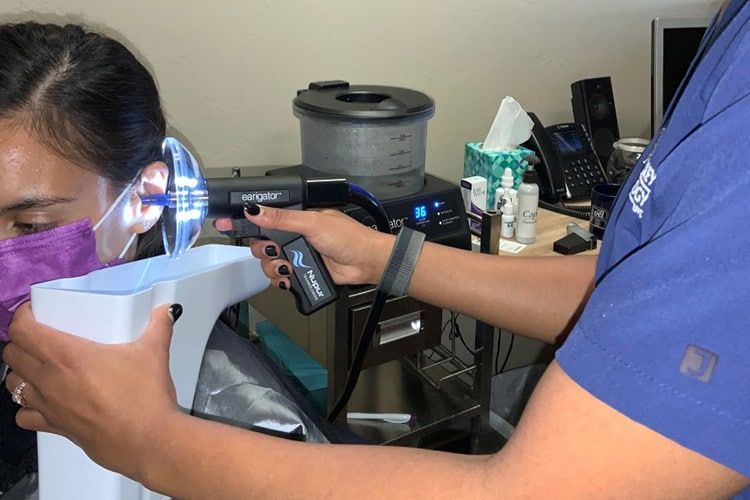
We live in a world where almost everything can be brought directly to our living rooms. From the weekly grocery shop and hot restaurant meals to flat-pack furniture and fitness instructors, convenience dictates how we manage our time. So why should taking care of your ear health be any different? When you're struggling with a stubborn ear blockage, travelling across town, battling traffic, and sitting in a waiting room isn’t always practical. For some, it’s not even possible. Dealing with muffled hearing, a sense of pressure, or ringing ears is already stressful enough without adding a logistical nightmare on top of it. That's where mobile earwax removal steps in. It brings the exact same professional standard of care you'd get in a high street clinic directly to your sofa. If you’ve never considered a home visit for your ears before, here is a complete guide to how it works, who it’s for, and why it might be the easiest medical appointment you ever book. Who Actually Uses At-Home Ear Care? There is a common misconception that home healthcare visits are only for the very elderly or bedbound. While it is an absolute lifeline for those groups, the demographic using mobile ear services is actually incredibly broad. Busy Professionals: If you work long hours or spend your days on back-to-back Zoom calls, taking three hours out of your day to travel to an appointment simply isn't feasible. A mobile audiologist can clear your ears on your lunch break, right in your home office. Parents with Tight Schedules : A home visit means you don't have to disrupt the family routine. Care Home Residents: For individuals in residential care or those living with dementia, a trip to a busy clinic can be deeply disorienting and distressing. Being treated in a familiar, comfortable chair makes the whole process calm and relaxed. Anyone with Mobility Challenges: Whether you rely on a wheelchair, have severe arthritis, or simply find public transport exhausting, mobile services remove the physical barriers to getting good healthcare.  The Step-by-Step Process of a Home Visit You might be wondering how a messy, clinical procedure can be done in your living room without ruining the carpet. The truth is that modern ear clearing is incredibly clean and completely dry. Step 1: Setting the Scene You don't need a medical bed or a sterile room. A normal dining chair, an armchair, or even your sofa works perfectly fine. The visiting professional will bring all their own equipment in a compact, portable case. Step 2: The Assessment The practitioner will never proceed blindly. Before anything touches your ear, the practitioner will take a brief medical history and look inside your ear canals using an otoscope. Step 3: The Microsuction Procedure If wax is confirmed and safe to remove, the practitioner will set up the microsuction machine. This is a medical-grade suction device attached to a tiny, sterile tube. While looking through magnifying loupes (special glasses with a bright light and microscope built in), they will gently vacuum the wax out of your ear. You’ll hear a loud rushing noise, and it might feel a bit tickly, but it shouldn’t hurt at all. Step 4: The Immediate Relief Because microsuction is so precise, the results are usually instant. The moment that final piece of compacted wax is lifted away, the sound of the room rushes back in. Patients often laugh at how loud their own fridge or the ticking of their clock suddenly sounds. Why This Beats Do-It-Yourself Remedies When an ear blocks up at home, the temptation to fix it yourself is strong. People often rely heavily on olive oil drops or, worse, cotton buds. Olive oil drops can help soften wax, but they rarely dissolve a heavy blockage completely. Instead, they can turn hard wax into a thick sludge that may smear across the eardrum, sometimes temporarily worsening hearing. As for cotton buds, they simply act like a ramrod, pushing the wax deeper into the narrowest part of the ear canal where it becomes firmly stuck. Having a professional carefully extract the wax is the only foolproof way to resolve the issue safely. Finding the Right Professional Because home visits have become so popular, there are more people offering the service than ever before. If you are looking for reliable Ear wax removal London wide, you need to be careful about who you invite into your home. Always ensure that the person visiting is a qualified, registered hearing care professional (such as an audiologist or a specially trained nurse), rather than someone who has completed only a short training course. Proper ear care requires an understanding of the complex anatomy of the ear, not just the ability to switch on a suction machine. Getting your ears cleared shouldn't be a hassle. With mobile services, you can protect your hearing, restore your comfort, and get on with your day, all without ever needing to find your car keys.